

Grounding a pilot program before takeoff
How the government tries — and abandons — new ideas
Josh Jacobs is a senior fellow at Searchlight focusing on Tech Viaduct, a project drafting the plans and people to modernize the federal government’s use of technology and digital services while undoing the harm of DOGE.
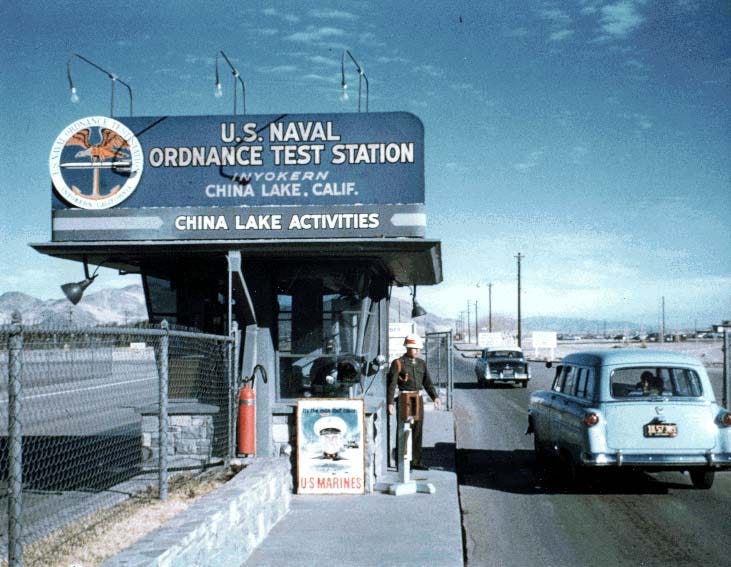
In Bureaucracy, his landmark 1989 book on American government agencies, political scientist James Q. Wilson examined the Navy’s personnel demonstration project at China Lake Naval Weapons Center.
China Lake, the Navy’s sprawling weapons research complex in the California desert, was exactly the kind of place where the mismatch between federal personnel rules and technical work was most visible.
The base employed thousands of civilian scientists and engineers doing cutting-edge weapons research, competing for the same talent as defense contractors and aerospace firms that could pay market rates and promote people based on technical skill rather than seniority and paperwork.
In 1980, the federal government authorized a demonstration project there: a deliberate experiment in whether relaxing the standard rules around classification, pay, and performance management would produce better outcomes. It ran for years, covered nearly eight thousand employees, and was considered to be the most significant test of new civil service rules ever conducted.
The results were striking. Pay was actually tied to performance in ways that rewarded good work and didn’t reward poor work. China Lake could offer engineers higher starting salaries and faster advancement, competing for talent it had previously lost to contractors.
Turnover declined, and it was the higher-performing employees who were least likely to leave. President Reagan proposed expanding the experiment to the entire federal workforce.
But it didn’t happen. The experiment stayed an experiment. China Lake remained a carve-out — another in a long series of government pilot programs that were grounded before take off.
Wilson used the China Lake story to illustrate something he observed repeatedly across American bureaucracy: pilot programs tend to prove their concept — only to then calcify into permanent exceptions and one-off attempts at something new. The lesson learned doesn’t flow back into the mainline system, or in this case the entire federal workforce. The exception becomes its own institution, carefully maintained and quietly celebrated, while everything outside it keeps running exactly as before.
Trying ≠ changing
Anyone watching the federal digital services movement develop over the past decade should find the China Lake story familiar.
The HealthCare.gov crisis in 2013 galvanized the creation of the United States Digital Service. 18F stood up inside GSA to offer in-house digital consulting to agencies. The Presidential Innovation Fellows program brought technologists in for short tours. Dozens of agency digital services offices followed. The people who built these organizations were talented and mission-driven, and they did real, consequential work.
But look at what these efforts actually were: workarounds. Each one was predicated on the idea that normal federal hiring couldn’t attract or retain the technical talent needed to deliver modern digital services, so a special structure was built alongside the normal system to do what the normal system couldn’t. Excepted service appointments. Direct hiring authorities. Tour-of-duty contracts.
That design made sense as a rapid-response measure. When a major government system is failing publicly, you don’t have time to fix the underlying personnel architecture. You develop a workaround.
The problem is what happened next: the workarounds became a permanent fixture, the underlying ways in which the government hired and recruited talent didn’t get fixed, and these two facts became mutually reinforcing. As long as the workarounds existed, there was a release valve for the pressure that might otherwise have forced structural change in the federal workforce. As long as there was no structural change, the workarounds remained necessary. The exception had become the system.
Check the schedule
This isn’t a criticism of the people who built USDS, 18F, or any of the fellowship programs. Many of them understood perfectly well that they were applying bandages, and said so. The problem is that bandages, however skillfully applied, don’t heal the underlying wound, and the federal tech community has spent more than a decade getting better at applying bandages.
But the underlying wound for government workforce development is, by most accounts, the current General Schedule system: a personnel architecture designed in 1949, built around the assumption that most government jobs are stable, classifiable, and interchangeable.
It has no real mechanism for attracting people with scarce technical skills, no way to pay them competitively once hired, and no career path that doesn’t require eventually becoming a manager. Every workaround built over the past decade has been, at its core, an attempt to get around one or more of these constraints without actually changing them.
China Lake proved in the 1980s that changing them was possible. But the lessons sat on a shelf — and eventually, even the shelf was cleaned.1
The workarounds and hacks introduced by the federal tech reform movement have now been around for twelve years and three presidents in four administrations. It’s time for a reckoning. The practices that have proven effective for bringing in useful tech talent should be expanded, made uniformly available to all agencies, and thoughtfully integrated with other parts of the federal workforce strategy. Then, the side doors should be closed.
Future work from Searchlight’s Tech Viaduct project will lay out what’s needed for real structural reform to the federal technical workforce — and the steps to get there. It’s time to make James Q. Wilson proud and turn a decade of learning via pilot projects into meaningful action across our government.
No more grounding the pilots. Clear the runway for liftoff.
The China Lake demonstration project was eventually designated a permanent “Alternative Personnel System,” then absorbed into the Defense Department’s National Security Personnel System (NSPS) in 2008. When Congress repealed NSPS in the 2010 NDAA, China Lake was swept out with it. Employees petitioned to return to the original system but OPM said it wasn’t possible. China Lake today operates under a successor arrangement that preserves some of the original flexibilities.
 |
|
Hi!
How do you convince government officials to approve projects without the proof of concept that pilots provide?
Or are you suggesting that we need to cultivate a culture in government that takes more risks in the first place?
Anyone who has worked in both the federal and private sector will attest to the fact that large companies in the private sector have similar problems with bureaucracy and politics. The trade-off that managed to attract and retain talent in key engineering and scientific areas of the federal workforce in the past was the deal the government made with its employees: less pay for stability and good benefits. After the DOGE debacle, the federal government is now an employer of last resort. Any prospective federal employee now knows that that not only will they not be valued, they can be used as political pawns, fired via tweet at any moment, or deemed unnecessary by some 20 year-old coder with a kitschy online handle. So yes, the federal workforce hiring and firing system must be reformed. But the fundamental problem now is attracting good talent in the first place. In order to do that, the federal government, or rather the next federal government, must acknowledge that DOGE was a terrible mistake and ensure it never happens again. This is likely best packaged as part of a more general reform that gets to the points made in this article. Two easy reforms are (1) tailor the GS scale to pay scientists and engineers more in key areas and (2) purge the view that managerial skills are portable and can be applied to any group, regardless of the manager's own subject knowledge.